
Loop Dungeon Incremental Tips and Tricks for Demo Runs
The repeatable lessons in the two demo videos are to develop survival alongside damage, distinguish collection from income and account for ability timing as runs become faster. Both creators change their investments when the next obstacle changes. These tips describe those observed patterns and confirmed convenience features rather than hidden bonuses or a guaranteed optimal build.
Guide · Reviewed October 16, 2026 · 1,158 words
At a glance
Several similarly presented features solve different problems. The published patch notes and visible tooltips distinguish collection convenience from application background behavior and resource information. Reading those descriptions in context avoids assigning an extra effect to a feature simply because it appears beside another upgrade in the tree.
| Topic | Documented information |
|---|---|
| Magnetism | The official tooltip describes automatic collection of on-screen gold and items. |
| Background running | The July patch describes continued progress when the game window loses focus. |
| Resource tooltips | The June update adds currency-type information to displayed skill-node requirements. |
On this page
Look beyond the next damage upgrade
Rogue repeatedly reaches the dragon before improvements to defense change the outcome of the fight. Idle cub also invests in surviving the encounter rather than only increasing damage, and later faces the same broader problem at the demon. These examples show that getting to a boss and staying alive against it are different parts of a successful attempt.
The same distinction appears during travel through ordinary rooms. The recordings discuss health lost between fights and the effect of moving through encounters more quickly. That creates a practical connection between combat speed, travel and remaining HP, although the sources do not provide a universal conversion between movement upgrades and survival or an exact value for every stage.
Read the currency shown on each node
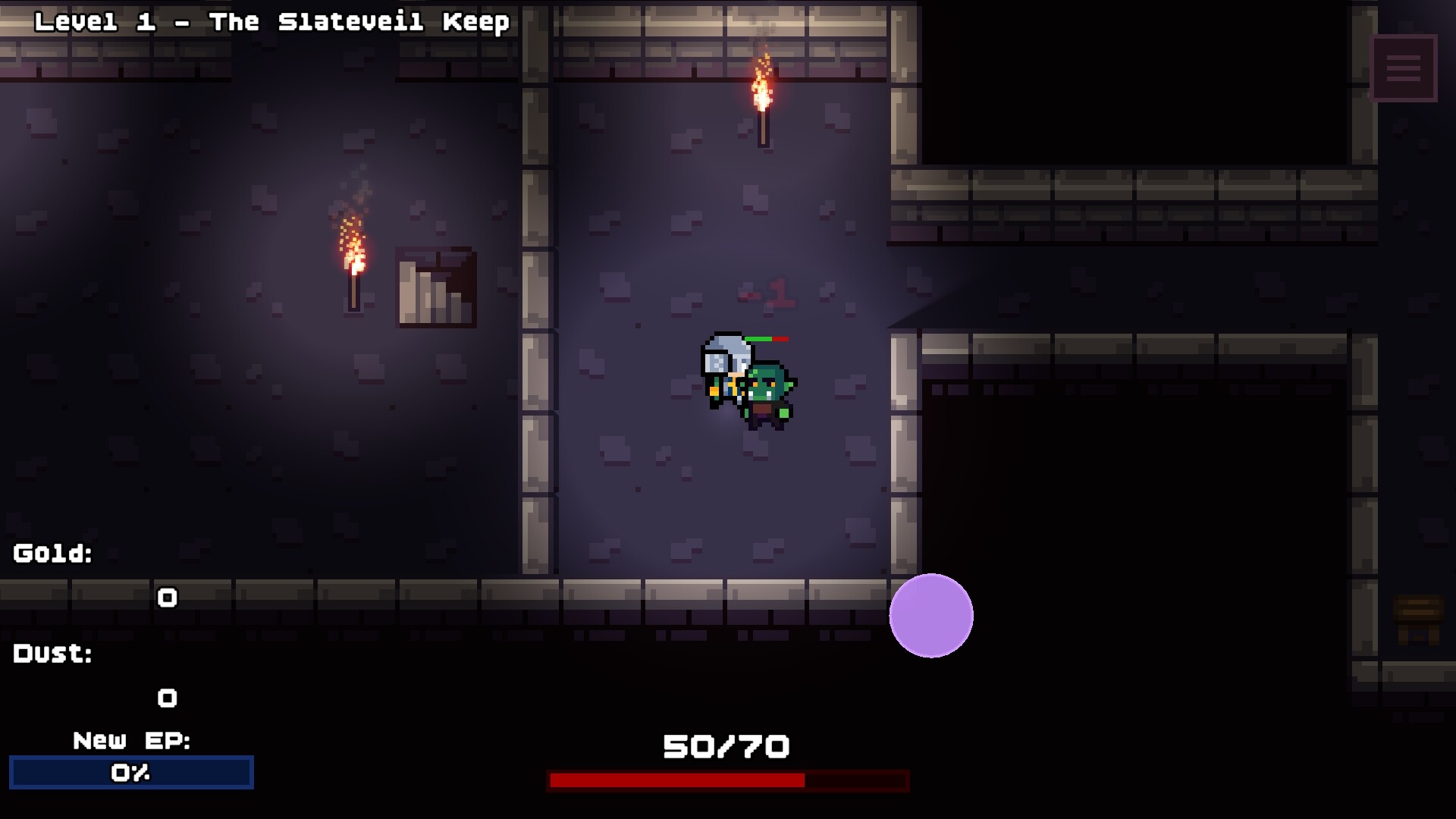
The tree contains several kinds of expenditure, not a single pool of money. Official screenshots label Gold, Dust, EP and Prestige Pts separately, while the videos use gold and magic dust for different improvements. A blocked upgrade can therefore reflect the type of resource required as well as the amount available in the current save.
The June update specifically improved skill-node tooltips by adding upgrade currency-type information. That is a confirmed usability change and a reason to read the node itself before comparing purchases. It also helps separate a displayed player balance from a purchase requirement, particularly when an official screenshot happens to show a node that is already at maximum level.
Separate automatic pickup from dust income
The official Magnetism screenshot describes automatic collection of on-screen gold and items. The July patch independently confirms an auto-pickup reward skill, so this is a documented convenience rather than a guessed interaction. Its purpose is collection, which is a different question from how frequently a particular resource appears in a run.
The videos also discuss a differently named dust-related economy node. Similar magnet-related wording can make those systems easy to combine incorrectly when reading automatic captions. The available evidence keeps them separate: one concerns pickup behavior, while the other is discussed in connection with dust drops, and neither should be assigned the other's effect merely because their names sound related.
More enemies change the job of your damage
Both recordings develop an upgrade that increases enemies per wave during the demo. Idle cub observes that additional enemies increase the income opportunity, while also finding that hitting a group is affected by how enemies appear and are targeted. More targets therefore change what the party has to clear, rather than simply giving an unconditional reward with no combat consequence.
Rogue likewise combines larger groups with further party development and clearing abilities. The observed progression connects resource investment and the ability to handle the resulting fights. That is more useful than treating an enemy-count purchase as a universal first priority, because the videos show the party's damage, survival and income changing together throughout the run.
Recheck ability timing when runs speed up
Idle cub explicitly encounters a timing change after moving through rooms faster. An ability that had previously recovered before a dangerous encounter is no longer ready at the same point in the route. This is a concrete example of a speed improvement changing the timing of another system rather than improving every aspect of the next fight independently.
Rogue's boss attempts also revolve around the order and timing of protective effects. The videos show the warrior's temporary buff and healing-related protection being used during dangerous encounters, with the creator changing that timing across attempts. The useful observation is the interaction between readiness and the encounter, not an exact cooldown schedule that applies to every version and party.
Distinguish comfortable farming from pushing
Both videos reach a harder area after the first substantial clear. Rogue explicitly returns to an earlier area when the new one provides poor results for the party's current condition. The official stage-selection screenshot also displays differing environmental pressure between stages, supporting the existence of a meaningful change in the demands placed on a run.
That does not identify a permanent best farming location. It demonstrates that an area can be available before the current party handles it comfortably, and that the creators use older content during further development. Progress toward a new clear and resource collection remain connected parts of the same loop, but their immediate goals differ at that point in the playthrough.
Use background mode within its documented scope
The July update confirms that the game can continue progressing when its window is not in focus. It also improves hero pathfinding and adds the reward-pickup feature, making repeated play more convenient. Those are specific published changes rather than a general promise that every action becomes automatic or every form of unattended play behaves identically.
The footage still includes manual clicks, active skill use and deliberate purchases. Background execution should therefore be distinguished from complete ability automation and from earnings while the game is closed. Keeping those concepts separate gives a clearer account of what the sources actually show and avoids turning a convenience setting into a claim about a different progression system.
Hero labels can refer to different interface elements
The official tooltip contains Cleric as the node label and Priest as the hero that node unlocks. This is a concrete explanation for two names appearing around the healing role, rather than evidence that the party has two separate verified healers. The combat screenshot similarly supplies an explicit Archer label, helping distinguish visible text from variable automatic-caption wording.
The naming distinction is useful when following an older video. A spoken reference can describe the character's function while the tree uses a different label for its unlock. Reading the official tooltip in context preserves the real relationship without turning every variation in commentary into another character, another branch or an additional acquisition rule.
A visible maximum does not reveal earlier prices
Some promotional nodes are already at maximum level when their tooltips are shown. That confirms the depicted state but does not list every expenditure that produced it. The surrounding Gold, Dust, EP and Prestige Pts counters likewise describe that save's remaining balances, so they should not be read as prices for unrelated nodes.
The June tooltip improvement matters for exactly this kind of reading. Its added currency-type information makes a node's requirement more explicit within the interface. This is a confirmed usability detail, whereas reconstructing a complete cost table from a maxed tooltip or a balance visible elsewhere would add numbers that the screenshot never actually states.
Sources
This article draws on the official descriptions, announcements, screenshots and recorded demo material below. Gameplay observations describe the demonstrations in those sources. Questions or corrections can be sent through the contact page.