
Loop Dungeon Incremental Farming Guide: Gold and Dust
Gold and magic dust are the main collected currencies repeatedly discussed in both demo videos. Their farming loops develop income-related nodes, enemy-count improvements and faster clearing while still accounting for survival. The evidence supports those farming levers, but it does not identify a verified launch-version best stage or a measured income-per-minute leaderboard.
Guide · Reviewed October 16, 2026 · 1,181 words
At a glance
Farming material can describe resources, collection or the demands of a route. Those are related subjects, but they are not interchangeable measures of income. The confirmed examples below keep each function attached to its actual evidence rather than turning a convenience feature or a stage unlock into an invented earnings rate.
| Topic | Documented information |
|---|---|
| Collected resources | Both videos distinguish gold and magic dust while developing the skill tree. |
| Collection function | Magnetism is officially described as collecting gold and items already on screen. |
| Route pressure | The stage-selection screenshot displays differing environmental HP loss between named destinations. |
On this page
Gold and magic dust serve progression
Both recorded playthroughs use gold and magic dust while developing the skill tree. The currencies become relevant at different moments as new purchases open, so a useful farming explanation must distinguish what the player is trying to collect. Having resources from a run is not the same as having the particular resource needed by the next visible node.
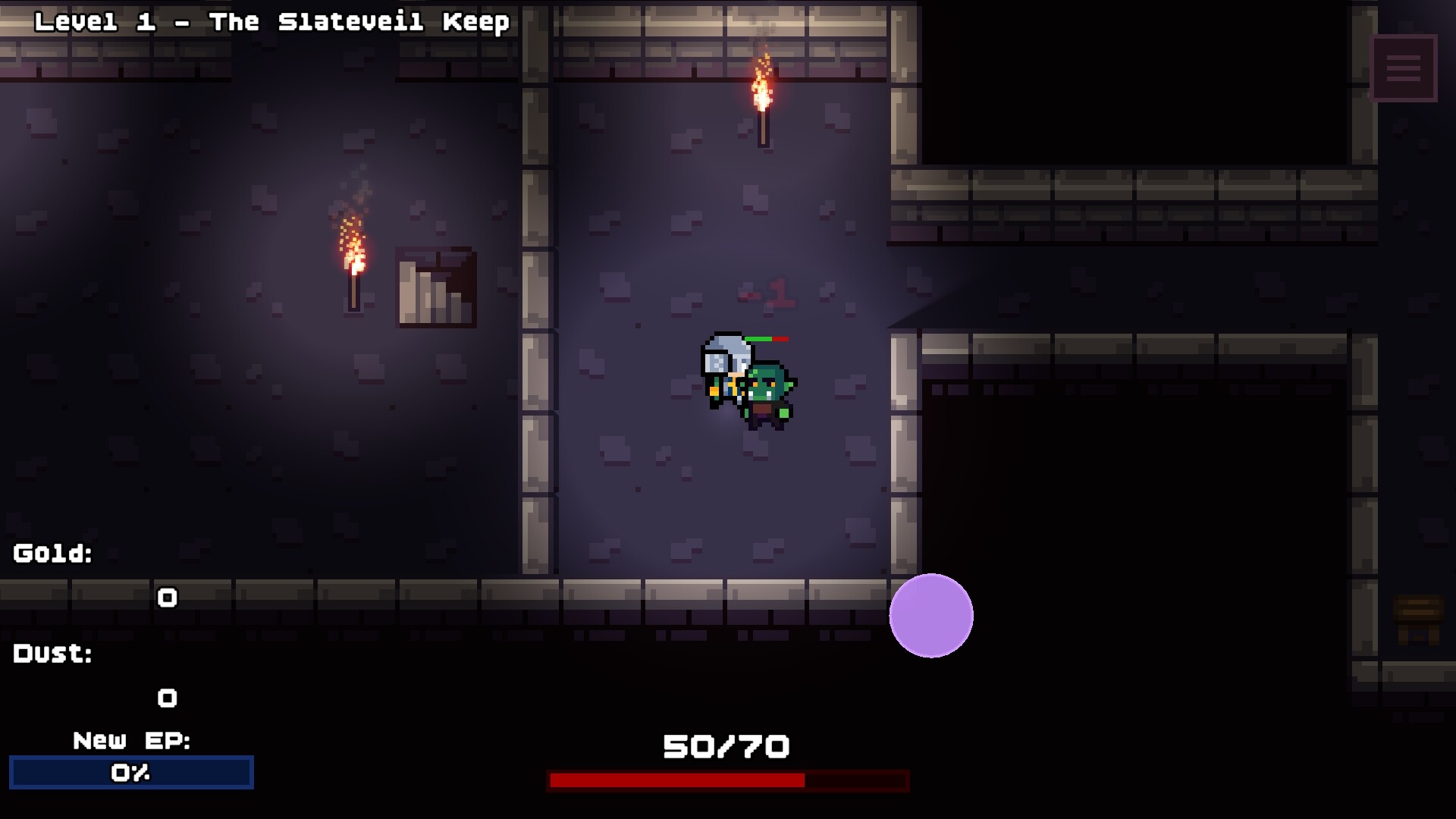
The official interface supports that distinction by displaying separate Gold, Dust, EP and Prestige Pts counters. The June update also added currency-type information to skill-node tooltips, tying the requirement to the node itself. Those labels document multiple progression resources, without establishing that every counter is earned in the same way or that all of them should be treated as ordinary item drops.
Income improvements appear in both recordings
Idle cub discusses dust-related and coin-related investments as the run develops. Rogue likewise moves toward improved resource collection and later focuses on magic dust when it becomes important for further abilities. These sequences independently establish that income development is part of the demo tree, rather than a farming concept borrowed from a different game with a similar title.
The recordings do not follow identical shopping sequences. Each creator changes priorities as the party's immediate needs change, which is why their spoken purchase choices should be kept separate from a universal optimal order. A resource improvement shown in a playthrough is a real part of that progression, but its place in that creator's run does not determine the best next purchase for every save.
More enemies create more work as well as opportunity
Both videos develop an upgrade that adds enemies to a wave. Their commentary connects the additional targets with the opportunity to collect more resources during the loop. That is useful evidence for the existence of an enemy-count farming lever, while also showing that income development changes the combat the party has to perform.
Idle cub encounters targeting complications when attempting to hit more than one enemy as a group appears. Rogue combines larger groups with party growth and improved clearing abilities over subsequent attempts. Together, the recordings show why additional enemies cannot be evaluated entirely separately from the party's ability to defeat them, survive the route and collect what those fights produce.
Collection convenience is a separate effect
The July patch adds an automatic reward-pickup skill. A current official screenshot identifies Magnetism and describes collecting on-screen gold and items automatically, providing a named example of that convenience. This corroborates the feature at a level beyond a creator's casual reaction to pickups during an older run.
The name should not be confused with the dust-related economy node discussed in the videos. Collection behavior and resource appearance are separate questions, even when similar magnet-related wording is used. The screenshot establishes what Magnetism collects, but it does not establish a fixed increase in gold income, an independent dust-drop probability or a farming multiplier that applies across stages.
Faster clearing changes the shape of a loop
Both creators develop damage and speed while working on resource income. Later footage includes group-clearing abilities, and Idle cub explicitly connects moving through enemies more quickly with gathering resources more quickly. These observations show that resource progression is connected to the pace of a run rather than only to a reward label on an individual node.
Speed also interacts with active ability timing. Idle cub notices that a faster route changes whether an ability is ready at the next dangerous encounter. That example prevents a simplistic account in which faster travel has no other consequences: the documented loop includes combat readiness as well as movement, and both contribute to what happens during the next attempt.
A harder area is not automatically a better farm
Rogue reaches a new area, finds the results poor for the party's condition and returns to an earlier route. Idle cub also encounters a substantial increase in pressure after the first area. These independent observations establish why a stage unlock and a comfortable resource loop can occur at different points in the development of the same party.
Official stage-selection material reinforces that context by displaying different environmental HP loss between stages. The screenshot includes The Slateveil Keep and The Gloamstone Crypt among its named entries. It does not identify a permanent best stage, but it confirms that the demands of an expedition change with its destination, which matters when interpreting the creators' resource comparisons.
Background running is not a published offline rate
The July patch confirms continued progress while the game window is not focused. That feature makes the application's background behavior part of the documented farming context, alongside the auto-pickup improvement introduced in the same update. It does not supply a table of earnings, a time-based reward formula or a statement that the application can be closed while earning the same resources.
The available sources therefore support describing what the farming loop contains without inventing a headline hourly total. Gold, dust, more targets, collection and the party's ability to clear encounters all appear in the evidence. A numerical best-stage comparison would require controlled observations beyond the two playthroughs, whose individual run totals reflect changing upgrades rather than equal test conditions.
A boss attempt can still contain resource activity
The recordings include resource collection during the broader process of developing toward boss clears. Idle cub explicitly discusses rewards during attempts that do not immediately defeat the encounter. That observation helps explain why the party's resource history and its list of successful clears need not advance in exactly the same pattern throughout a recording.
It does not establish a universal reward for damaging every boss. The source is the creator's particular demo attempt, with changing development and encounter conditions around it. The supported description is that reward activity and an unsuccessful pushing attempt coexist in the demonstrated loop, while an exact resource-per-hit formula would require evidence beyond that commentary.
Keep the resource goal attached to the purchase
Rogue shifts attention toward magic dust when developing later abilities, while Idle cub also revisits dust-related investment during the recording. The official tree's separate counters make that change understandable: a run can provide material that is useful for one improvement while another still needs a different resource. This is a documented distinction between accumulation in general and the expenditure being considered.
The June update's added currency-type information further supports reading that requirement from the node. It does not turn one creator's temporary resource preference into a permanent economy ranking. The useful account of farming stays connected to the actual progression context, with gold and dust described through their observed roles rather than a fabricated exchange rate or global priority.
Sources
This article draws on the official descriptions, announcements, screenshots and recorded demo material below. Gameplay observations describe the demonstrations in those sources. Questions or corrections can be sent through the contact page.