
Loop Dungeon Incremental Loot Guide: Resources and Pickups
Both recorded demos collect gold and magic dust and use them for progression through the skill tree. The official material also confirms automatic pickup and displays other point counters separately. Loot is therefore a mix of collected resources and progression context, while exact current chest odds and a complete equipment drop table are not established here.
Equipment & Loot · Reviewed October 16, 2026 · 1,201 words
At a glance
The visible resource information contains several different categories. Collected currencies, progression points and pickup behavior appear together, but each answers a separate question about the loop. The table keeps those functions distinct so a player can read the interface without assuming that every counter is an item or every collection feature changes drop odds.
| Topic | Documented information |
|---|---|
| Gold and dust | Both English recordings collect these resources and use them during tree development. |
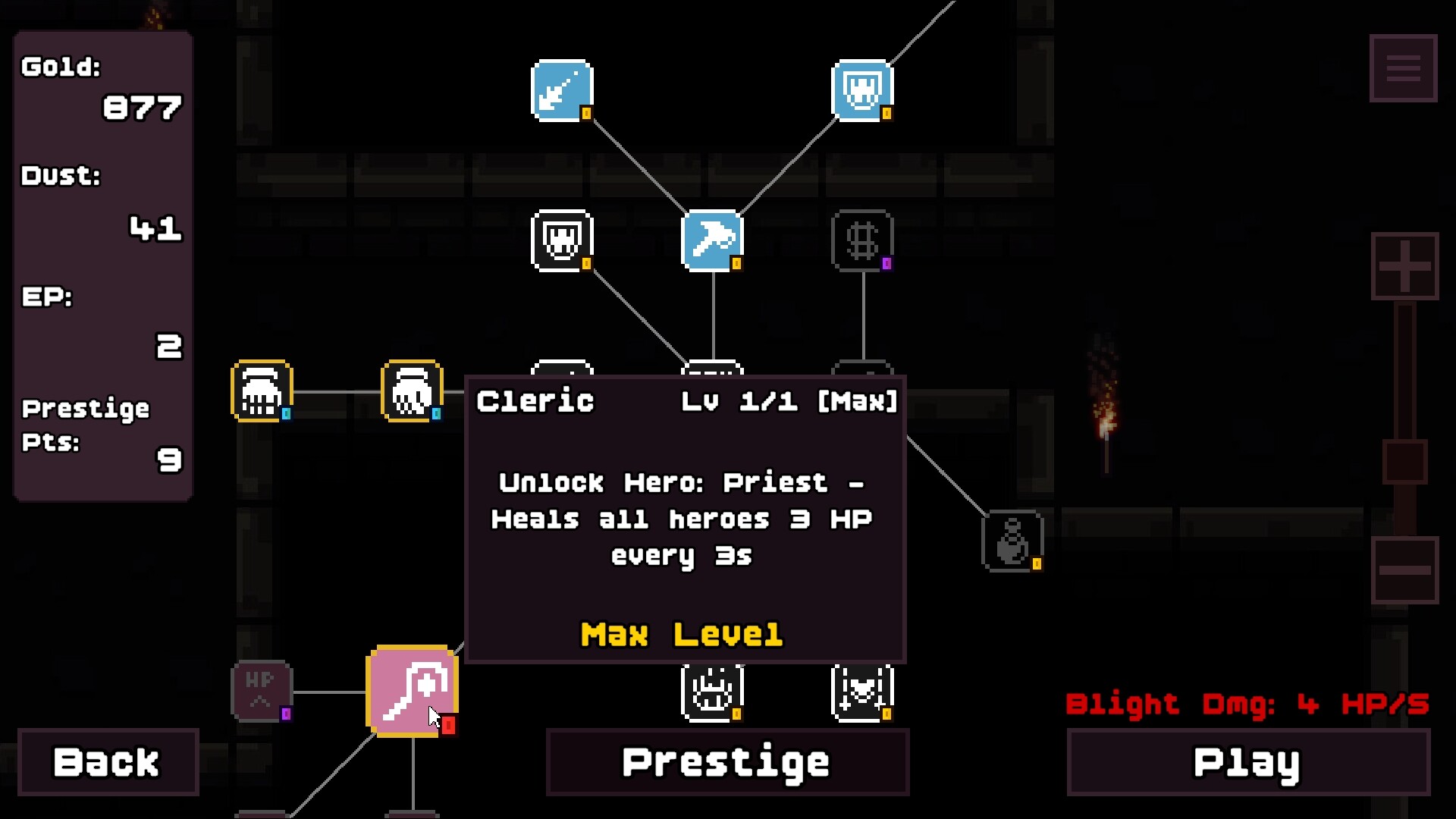
| Progression counters | Official screenshots separately display EP and Prestige Pts beside the collected-resource balances. |
| Automatic pickup | Magnetism describes collecting on-screen gold and items, corroborating the published pickup feature. |
On this page
Gold is visible throughout the recorded loop
Both creators collect gold during their dungeon attempts and return to the tree to spend resources on development. Gold-related purchases also appear as their parties become more capable, linking the run's rewards with future improvements. This is a repeatedly observed resource loop, rather than a currency inferred from a decorative coin icon or borrowed from another game.
The official store supports that broader relationship by connecting loot, permanent upgrades and repeated expeditions. The videos supply the gameplay context that the marketing description alone does not show in detail. Together, those sources establish gold as part of the documented progression without supplying a permanent exchange rate, a universal reward per enemy or an exact best route for every version.
Magic dust is a distinct collected resource
Magic dust appears during both English playthroughs and becomes relevant to later purchases in the tree. The creators discuss it separately from gold and develop income-related options around the resources they need. That gives the guide two independently documented collected resources, rather than treating all of the material earned during a loop as an interchangeable pool.
The official screenshots label Dust separately from Gold. The interface evidence agrees with the recordings on that distinction, while the June update's tooltip change further confirms the importance of currency type when reading nodes. A dust balance and a gold balance therefore describe different parts of the save, not two labels that can be substituted when explaining whether a purchase is affordable.
Point counters need their own interpretation
An official tree screenshot also displays EP and Prestige Pts alongside the collected-resource counters. Their presence confirms that several kinds of progression information appear in the same interface. It does not establish that every counter is a physical object dropped by a chest, so a resource guide should avoid turning the entire sidebar into one undifferentiated item list.
The videos likewise distinguish upgrade points and prestige-related development during the party's growth. These observations support reading the tree's requirements carefully rather than assuming every upgrade is bought with gold alone. The sources are strongest on the existence of these separate layers, while exact current acquisition formulas for every counter would need more explicit evidence than the screenshots provide.
Chests are part of the demo evidence
Both recordings encounter chest rewards during their dungeon progression. Their commentary includes magic dust, and Idle cub also encounters gold in a chest. This establishes chests as a documented reward context in the demo rather than a feature guessed from the dungeon setting or imported from a similarly named title.
The examples do not form a complete probability table. A few observed rewards within changing runs cannot identify every chest outcome or establish the exact chance of a particular result. The reliable statement is that the recordings show those reward types, while presenting a percentage from an isolated observation would imply a level of measurement that the collected footage does not contain.
Magnetism changes collection behavior
The official screenshot labels a node Magnetism and describes automatic collection of on-screen gold and items. The July patch independently confirms the addition of an auto-pickup reward skill, giving that feature both a named visual description and a dated developer announcement. This makes automatic pickup a confirmed part of the game's documented progression material.
Collection should still be kept separate from drop behavior. Picking up rewards automatically describes what happens to material already on screen, not necessarily how often the dungeon creates that material. The screenshot therefore does not establish a resource multiplier, and similar magnet-related names in the videos should not be used to assign a dust-drop effect to Magnetism without an explicit connection.
Keep official descriptions within their scope
The store describes valuable loot and lasting improvements, while the demo announcement connects rewards with skill-tree growth. These are authoritative statements about the game loop, but they do not enumerate a complete inventory or current item pool. A detailed list of named equipment, rarity tiers or recipes would therefore require information beyond the general word loot in those descriptions.
The version context matters as well. The full-game announcement says more heroes, skills, bosses and levels are being added beyond the demo, so the July recordings are examples rather than a complete release database. This guide keeps its resource names and pickup behavior grounded in the collected material, without filling the remaining gaps with stale localized marketing claims or unrelated mobile-game equipment.
Visible pickup behavior changes with development
The creators encounter collection-related functionality during their playthroughs rather than beginning with every convenience already developed. This gives context to moments of manual attention around early rewards and later discussion of automation. The official July pickup announcement supplies a dated feature description, while the current Magnetism image supplies a visible name and stated collection scope.
These sources are complementary rather than identical snapshots of one save. The recordings show an evolving progression sequence, while the screenshot presents a selected node in promotional material. Together they support describing the existence and function of pickup development without assuming that every build begins with exactly the same collection behavior or that every similarly named node has the same effect.
Loot remains connected to the party's condition
The videos collect resources during the wider process of improving combat and reaching harder content. More enemies and faster clearing appear alongside income development, while harder areas place more pressure on survival. Those observations explain why the amount collected during a single attempt depends on the progression context rather than a resource name alone.
The official website frames the same loop through entering, fighting, bringing back loot and investing in growth. It does not replace the videos with a detailed numerical reward table. The reliable guide therefore identifies materials, counters and collection features while keeping the broader link to party development clear, rather than presenting a universal fixed yield for every expedition.
Sources
This article draws on the official descriptions, announcements, screenshots and recorded demo material below. Gameplay observations describe the demonstrations in those sources. Questions or corrections can be sent through the contact page.