
Loop Dungeon Incremental Best Equipment: What Is Known
A named best-in-slot item is not established by the collected Loop Dungeon - Incremental sources. The verified material shows skill-tree development, including defense-related purchases, rather than a controlled equipment comparison. This page explains those confirmed improvements without turning armor terminology or an upgrade icon into an invented item ranking.
Equipment & Loot · Reviewed October 16, 2026 · 1,178 words
At a glance
The most concrete progression material is a set of interfaces and recorded purchases. Each shows a real function, but none should be relabelled as an item without evidence that it is one. The table preserves those confirmed distinctions so the question about equipment does not accidentally become a fictional inventory derived from upgrade icons.
| Topic | Documented information |
|---|---|
| Defense development | Both recordings discuss survival-related purchases in the context of the skill tree. |
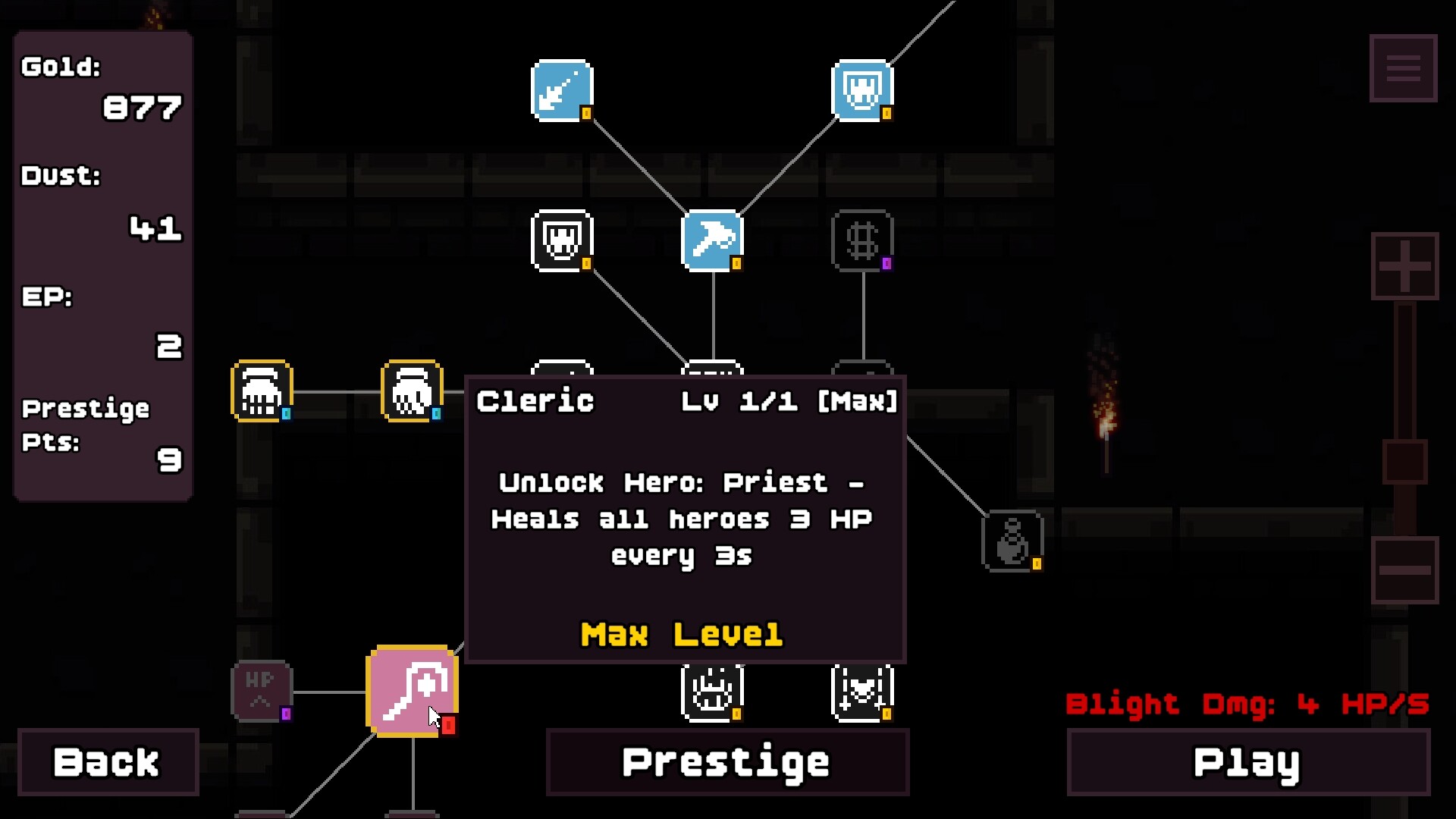
| Cleric tooltip | The official image describes a hero unlock and party healing, rather than a wearable item. |
| Magnetism tooltip | The official image names an automatic collection node, rather than an equipment rarity. |
On this page
The evidence describes upgrades more clearly than gear
The official store connects loot collection with permanent improvements and party development. It does not provide a complete equipment catalogue within the material collected for this guide. That distinction matters because a broad promise of loot does not establish the names, slots, rarity levels and acquisition requirements needed to recommend a particular best-in-slot item.
Both English demo recordings focus extensively on purchases in a skill tree. They discuss attack, health, defense, resource development and abilities as the party grows through repeated runs. Those are concrete progression systems supported by gameplay evidence, while a ranked inventory list would make an additional claim that the footage and inspected official pages do not substantiate.
Armor wording does not automatically identify an item
The creators sometimes discuss armor or defense while developing their parties. In the documented examples, those comments occur around tree purchases and attempts to survive dangerous encounters. A word used during a purchase therefore needs the context of the interface, rather than being treated automatically as proof that a named piece of wearable equipment has been obtained.
The official screenshots reinforce that distinction by showing connected nodes and tooltips in a branching tree. One image displays a Cleric node, and another names Magnetism as a collection ability. These are examples of upgrade functionality in the interface, not an equipment inventory with a published rarity ladder, so their icons should not be repurposed into fictional gear entries.
Defense is a demonstrated part of survival
Rogue improves defense while attempting the dragon, and the resulting fight goes differently from earlier failed attempts. Idle cub also develops survival-related capabilities around dangerous encounters and later continues that work against the demon. These independent observations support explaining defensive investment as part of the recorded progression, rather than assuming that all improvement comes from higher damage alone.
The videos are still changing-save playthroughs rather than isolated comparisons of individual purchases. Their outcomes include party development, ability use and other investments around the same period. Consequently, they show defense contributing to actual attempts without establishing a universal armor value, a fixed item tier or a guarantee that one purchase wins the fight under every version's conditions.
Party improvements have different functions
The official website describes frontline, damage and support roles. Both recordings expand the opening party with a ranged attacker and a healer, connecting offensive and survival development within the same run. This is a documented way for the group to change its capabilities, and it is separate from choosing between named inventory pieces.
The Cleric tooltip clarifies the support side by identifying Priest as a hero who heals the party. An official gameplay screenshot also labels Archer and Mage skill groups. These sources establish real character and skill information, but they do not establish signature weapons, class-exclusive armor sets or equipment bonuses that can be assigned to those heroes without another explicit source.
Resources are not interchangeable with equipment
Gold and magic dust appear in both videos and are used during tree development. Official screenshots also display EP and Prestige Pts separately, showing several progression counters rather than a single kind of loot. Those labels help explain what the player sees without requiring every collected resource or point to be described as a wearable item.
The June update added currency-type information to node tooltips. That confirms the importance of the displayed expenditure when interpreting a purchase, while leaving a player balance distinct from a price. A screenshot of a maxed node and its surrounding resource totals does not reveal an item's acquisition cost, and a counter labelled Dust does not establish a particular crafting recipe.
Collection features answer a different loot question
Magnetism is explicitly named in an official screenshot and described as collecting on-screen gold and items automatically. The July patch also confirms an automatic reward-pickup skill. Those sources support a concrete explanation of collection behavior, rather than a guessed property assigned to an imagined magnet accessory or a rare equipment slot.
The videos discuss other income-related nodes as well, including development focused on dust and coins. Their role is connected with the resources available during later progression, not evidence of a complete gear-grading system. Keeping collection, income and combat effects separate preserves the useful facts in the material instead of merging several different tree functions into a supposed equipment build.
What this means for an equipment recommendation
The verified choices documented here concern improving the party through its tree and responding to the demands shown during runs. Defensive development, offensive contributions, healing and active ability use all appear in the sources. These can explain why a party becomes more capable without naming an unverified item as the answer to a search for the best equipment.
The game identity is particularly important for this question. The collected material concerns Playsect's Steam app 4621970, while the shorter game name also appears around an older mobile title. Importing that other game's artifacts, rarity labels, recipes or equipment tables would produce a confident-looking answer about a different game, so none of those details are presented as facts about this one.
A pictured party does not establish a gear loadout
The official combat image labels Archer and Mage skill groups and shows several characters in a dungeon fight. That supplies character and interface information, but it does not display a named inventory set with item descriptions. A weapon-shaped visual or a character carrying an object cannot, by itself, establish the equipment comparison needed for a best-in-slot recommendation.
The recordings similarly combine party development with resources and active skills. Their successful clears are outcomes of changing saves rather than isolated comparisons between named pieces of equipment. Those observations remain useful for understanding party improvement, while they should not be repackaged as proof of an item bonus that was never explicitly shown or described.
Reset information belongs to progression, too
Both English demos show ordinary rebuilding after prestige, and the official store describes that reset as part of lasting growth. This demonstrates another reason to keep the tree's terminology precise: an upgrade's place in progression and a piece of equipment's inventory behavior would be different claims. The collected material directly supports the former system without publishing a complete specification of the latter.
The same caution applies to the newer full-game announcement. It expands the promised content but does not supply a named best-equipment ranking in these sources. The appropriate factual answer therefore remains the documented party and defense development, while a complete release gear table cannot be reconstructed from broad loot wording or a promotional icon.
Sources
This article draws on the official descriptions, announcements, screenshots and recorded demo material below. Gameplay observations describe the demonstrations in those sources. Questions or corrections can be sent through the contact page.