
Loop Dungeon Guide: Combat, Loot, Heroes and Prestige
Loop Dungeon - Incremental is built around repeated dungeon runs: fight, collect resources, improve your party and return stronger. Heroes attack automatically, while the demo also lets you contribute through manual clicking. The official description and two independent demo playthroughs confirm that loop, including hero unlocks and prestige progression.
Guide · Reviewed October 16, 2026 · 1,165 words
At a glance
The main systems operate at different points in progression. An ordinary attempt produces resources, tree development changes the next attempt and prestige introduces a broader reset. Keeping those stages separate explains how repeated short runs can contribute to a longer adventure without assuming that every event preserves the same state.
| Topic | Documented information |
|---|---|
| Dungeon run | Automatic hero combat and manual assistance appear together in the documented demo loop. |
| Skill tree | Resources support further combat, collection and party development between repeated expeditions. |
| Prestige | The reset adds lasting benefits while ordinary progression is rebuilt in both recordings. |
On this page
Understand what a dungeon run does
A run sends your party into the dungeon, where battles and resource collection contribute to your next round of improvements. In both recorded demos, the opening party is weak and its early attempts are short. Returning to the skill tree creates another opportunity to spend what those attempts produced, so the first unsuccessful expeditions still belong to the progression cycle.
The official store makes repeated growth central to the game rather than treating each expedition as a separate campaign. Its description connects loot, permanent improvements and stronger party combinations. That broad structure explains why a guide needs to cover combat, resources and resets together, even though each of those systems has its own decisions and interface.
Separate automatic battles from player input
The demo announcement explicitly combines automatic hero attacks with manual clicking. Both creators use clicks during their opening fights while the warrior contributes damage independently. This makes the early game more active than simply watching a party advance, and it explains why click-related improvements appear alongside upgrades that strengthen individual heroes.
Automation also has several meanings within the collected material. A July patch adds background running and an automatic reward-pickup skill, while the videos show collection-related abilities in the tree. Those features concern running the game and collecting rewards; they are not evidence that every active ability casts itself or that a closed game continues earning resources.
Read the resource counters separately
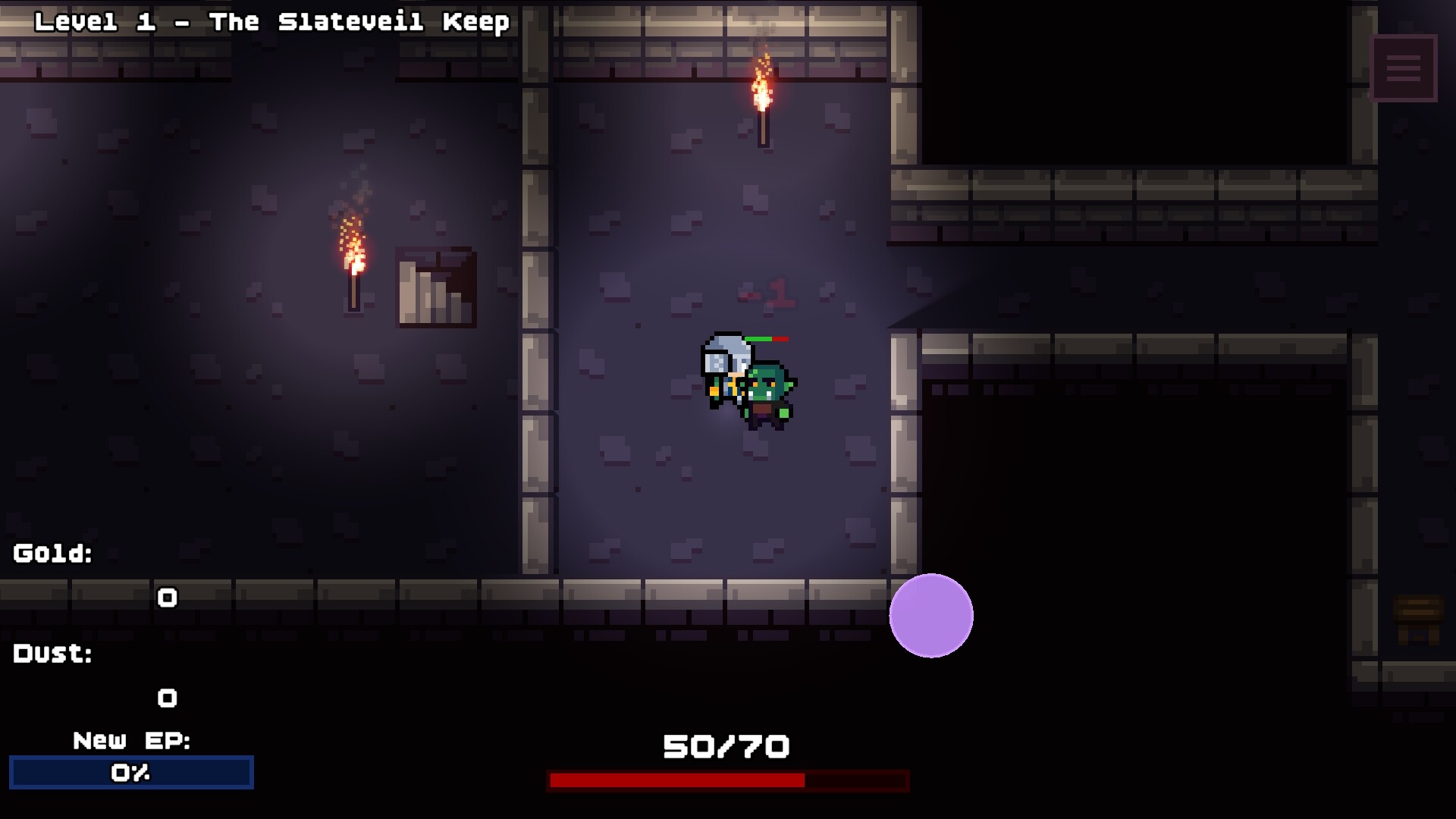
The official skill-tree screenshot displays Gold, Dust, EP and Prestige Pts as distinct counters. Both demo recordings show gold and magic dust being used during progression, with upgrade points appearing as another spending resource. Reading those labels separately matters because a balance in one counter does not establish that the party can afford a node priced in another.
The developer improved currency-type information in skill-node tooltips in the June update. That change supports using the displayed node information when deciding what to buy. It also prevents a common misunderstanding of screenshots: a player's remaining balances describe the state of that particular save, rather than revealing every node's purchase price or acquisition requirement.
Build around complementary hero roles
The official website describes frontline, damage and support responsibilities. Both July videos build a party around a warrior, a ranged attacker and a healer, showing how additional heroes change the feel of later runs. Those recordings document a working demo party, rather than a controlled comparison that establishes the strongest possible lineup for every stage.
Official screenshots add useful detail to the hero interface. One tooltip calls the unlock node Cleric while naming the unlocked hero Priest, and another screenshot labels Archer and Mage skill groups. These are specific documented names, but they do not turn the pictured party into a complete roster or establish every hero's acquisition route.
Recognize a progression wall
Both recordings move from ordinary dungeon enemies toward a dragon encounter, with survival becoming an important part of their attempts. Later play introduces a demon and further pressure on the party's ability to remain alive. The observed route is therefore about developing several connected capabilities, rather than increasing a single damage value and ignoring the rest of the party.
A harder unlocked area also changes the context of an expedition. The creators encounter a sharp increase in pressure after their first area, and Rogue returns to an earlier area when the new run produces poor results. That is a documented example of progression and farming serving different purposes: reaching somewhere new and collecting resources comfortably are related achievements, but they are not identical.
Understand prestige before confirming it
The store confirms that prestige supplies lasting benefits after a reset. Both videos show an initial prestige cycle after the first level is cleared, followed by rebuilding ordinary progression through the skill tree. The visible reset is an important distinction from ending an ordinary run, because repeating an expedition and resetting progression are different actions.
The official interface includes a Prestige action and a separate Prestige Pts counter. The developer also revised the information shown for prestige in update 0.1.8. Together, these sources support explaining the system as a new layer of growth, without assuming that every currency, hero unlock or purchased node survives every kind of reset.
Keep the demo and full game in context
This guide draws on research reviewed before the planned October 19, 2026 release. The developer's later announcement says the full game adds heroes, skills, bosses and levels beyond the demo. July footage can therefore explain the game's systems and demonstrate real encounters, but its ending is not a full campaign-length measurement or an exhaustive content list.
Save migration is another place where version context changes the answer. The newer developer announcement permits a one-time full transfer from Demo 0.9.0 onward, while older demo progress receives a compensation choice. That rule concerns moving between versions of the game; it is separate from prestige and should be checked before treating a demo save as the starting point for the complete release.
How the different systems connect
The skill tree connects several changes that the footage introduces at different times. A larger party can contribute more kinds of combat support, while income-related development creates resources for further purchases. Prestige then changes the broader development state, so an overall guide needs to distinguish the immediate run from the longer cycle that contains it.
That connection is visible without assuming that every system has the same objective. Collection affects rewards already on screen, combat affects encounters and the migration policy concerns a different version of the game. Keeping these responsibilities clear explains more of the actual interface than treating every named feature as a single general power increase with identical behavior.
Read screenshots together with the recordings
The official gallery supplies labels that are easier to verify visually than through automatic speech recognition. Its Cleric tooltip identifies Priest, while its combat image names Archer and Mage skill groups. The recordings supply the progression context around related roles, allowing a name in the promotional interface to be connected with an observed function without guessing additional abilities.
Those sources also capture different stages of development. The later full-game announcement expands the available content beyond the older demos, while a still screenshot does not provide the entire route leading to its pictured state. Using them together supports a clear systems explanation, with the source of each detail kept distinct rather than flattened into an imaginary single tested build.
Sources
This article draws on the official descriptions, announcements, screenshots and recorded demo material below. Gameplay observations describe the demonstrations in those sources. Questions or corrections can be sent through the contact page.