
Loop Dungeon Incremental Boss Guide: Dragon and Demon
The two English demo playthroughs encounter a dragon and later a demon. Both creators develop survivability alongside damage and use temporary combat abilities during their attempts. These are documented demo fights, while the developer's later announcement confirms additional full-game bosses rather than a complete two-boss release roster.
Guide · Reviewed October 16, 2026 · 1,187 words
At a glance
The fight information comes from two kinds of direct material. An official image identifies the dragon, while independent recordings show progression toward that encounter and the later demon. Their combined scope supports a guide to the demonstrated fights, rather than a complete statistics sheet for every boss in the game.
| Topic | Documented information |
|---|---|
| Dragon identity | The official Level 1 screenshot explicitly labels the encounter Dragon. |
| Demon context | Both English creators reach a later demon during their demonstrated demo content. |
| Combat development | Survival purchases, temporary buffs and later healing appear around the recorded boss attempts. |
On this page
The dragon is a documented encounter
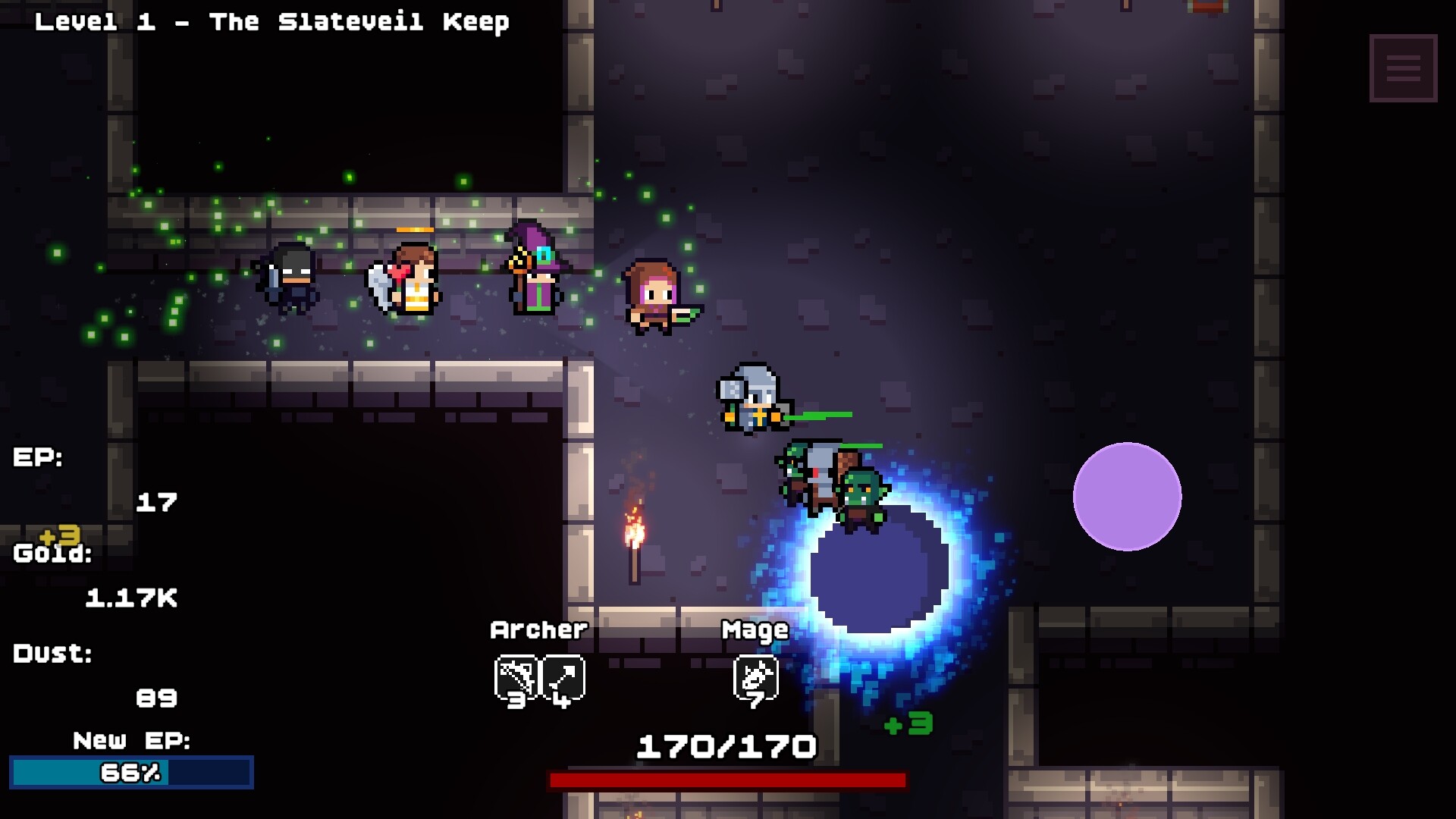
Both videos reach a dragon after fighting through ordinary dungeon encounters. An official screenshot explicitly labels Dragon on Level 1, independently confirming the encounter name in the promotional gallery. This gives the guide a named fight supported by more than an automatic-caption transcription or a viewer's interpretation of the creature's appearance.
The screenshot is a moment within a fight, not a complete boss specification. Its visible health bar does not establish maximum boss HP or a universal requirement for defeating the encounter. The videos provide stronger evidence for how the creators develop toward a clear, while the still image confirms the label without supplying missing damage formulas or elemental weaknesses.
Arriving at the boss and surviving it are different
Both creators reach dangerous encounters before their parties can finish them. Their repeated attempts distinguish the work of getting through the ordinary route from the work of remaining alive against the boss. That is why a guide based on these runs needs to discuss party condition and survivability rather than describing every loss as a simple shortage of damage.
The footage includes environmental pressure during the route as well as direct combat damage. A party can therefore arrive at the encounter with an existing survival problem, as the recordings demonstrate across several attempts. These observations are meaningful even without an invented health threshold, because they identify different parts of the attempt that the creators address through further development.
Defense changes the recorded dragon attempts
Rogue invests in defense and boss survivability before a successful dragon clear. Idle cub also makes survival-related purchases and returns to the encounter with the warrior's temporary ability available. The shared pattern across separate recordings is the development of a party able to remain in the fight, alongside its ongoing ability to damage the boss.
Neither video is an equal-investment experiment comparing every defensive option. Both creators make purchases while learning the tree and reacting to their latest attempt. Their runs therefore support a description of what helped those clears, without proving that a specific node is always the highest-value purchase or that a quoted demo value guarantees the same result in a different build.
Time temporary abilities for the actual encounter
Both recordings include a temporary warrior combat buff during boss progression. Idle cub tests when to activate it around the dragon, while Rogue also connects the buff with dangerous combat. The relevant observation is that active abilities have a timing dimension, so the moment of entering the encounter and the moment protection is useful are part of the recorded decisions.
The videos also show why repeating a fixed timestamp is not a complete strategy. Changes in movement and clearing speed alter how long the party takes to reach later rooms, and Idle cub notices ability readiness changing with that pace. A timing explanation is therefore about the interaction between the route and the fight, not an unchanging sequence of seconds that the sources establish for every run.
The demon is a later demo obstacle
Both English videos eventually reach a different boss described as a demon. The encounter appears later in their demo progression, after substantial party development beyond the opening warrior attempts. This is a separately documented fight, rather than an assumed variant of the dragon created to fill out a roster or a guessed enemy from an unrelated game.
The creators develop further survival and combat capabilities around that encounter. Rogue's later sequence uses healing, a protective skill and buff timing while working toward a clear, and Idle cub also emphasizes staying alive through the longer fight. These are observed approaches in their respective demos, without enough evidence to publish exact demon statistics, guaranteed resistance breakpoints or a complete current attack pattern.
Healing adds another part to the survival problem
The official Cleric tooltip identifies Priest as a party-healing hero. Both recordings introduce that role during their development, which gives the later boss attempts more support than the opening party had. The sources therefore connect hero composition with survivability rather than treating the boss fight as entirely independent of the party assembled through progression.
Rogue also finds that healing does not simply remove all pressure from the route. The party continues to develop defense and protective abilities while attempting the harder content. That distinction matters because the existence of a healer is confirmed, but the sources do not justify turning that role into an automatic victory condition or a claim that every source of damage is permanently negated.
Keep demo clears within their version scope
The two recordings end after clearing the later demon content shown in their demos. Those endings establish the endpoint of each playthrough, while the developer's full-game announcement explicitly promises more bosses and levels. The demonstrated demon should therefore be described as a later demo encounter, not declared the final boss of the complete game.
The same version boundary applies to party options and ability details. Current promotional material labels Mage, and the release announcement introduces the Rogue and a new Priest skill beyond the older footage. These additions explain why the guide presents confirmed encounters and observed approaches, while avoiding a supposedly exhaustive launch roster or a single mandatory full-game composition.
Official labels and creator observations serve different purposes
The Dragon label in the Steam gallery confirms the name visible in a promotional encounter. The two recordings then provide independent examples of reaching and developing toward that fight. These sources complement each other because a label identifies the encounter while the footage shows a sequence of attempts, rather than either source replacing the other's role.
The later demon is likewise grounded in both playthroughs, but the material does not supply an equally detailed current statistics sheet. Calling it a later demo encounter preserves what the footage establishes. Assigning an unsupported proper name, elemental weakness or full-release final-boss status would turn a real observation into a different claim that the sources do not make.
Boss development remains connected with the tree
The creators return to purchases between their attempts, developing party combat and survival through the same progression interface used during ordinary runs. Gold and magic dust remain relevant to those improvements, while different nodes use different displayed resources. This ties a boss clear to the wider dungeon loop rather than treating the encounter as an isolated test of manual input alone.
The official site also connects party roles and composition with fights. That agrees with the recorded presence of frontline, ranged damage and healing during later attempts. Their combined contribution is documented, while the sources do not isolate a universal best hero, exact investment budget or mandatory build that must be reproduced before every boss clear.
Sources
This article draws on the official descriptions, announcements, screenshots and recorded demo material below. Gameplay observations describe the demonstrations in those sources. Questions or corrections can be sent through the contact page.